
Distinguished Lecture Program
The EAG Distinguished Lecture Program focuses on Central and Eastern Europe and aims to introduce and motivate scientists and students located in under-represented regions of the world to emerging research areas in geochemistry. The Distinguished Lecturer is selected each year based on a combination of outstanding research contributions to geochemistry and the ability to clearly communicate these contributions to a broad audience.
Distinguished Lecture Program 2027
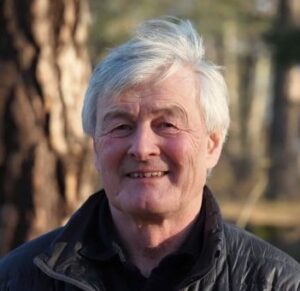 Distinguished Lecturer: Dr. Martin Whitehouse
Martin Whitehouse is a professor at the Swedish Museum of Natural History in Stockholm. He obtained his D.Phil. from the University of Oxford in 1987 and followed this with postdoctoral positions at USGS, Menlo Park, Ca. and the University of Oslo, returning to a research position in Oxford in 1990. Since arriving at the museum in 1996, he has developed and applied high-spatial resolution methods with large-geometry secondary ion mass spectrometry and has directed the NordSIMS facility since 2000. His primary research interest is in the application of radiogenic isotopes and geochronology to the evolution of the Earth’s earliest continental crust. In addition to crustal evolution, his research encompasses studies of planetary evolution, Gondwanan tectonics, the behaviour of geochronometers during metamorphism, and early Earth surface environments and biogenicity.
Lectures proposed
Geological constraints on Earth’s earliest life – pitfalls and progress
Often spectacular claims for Earth’s earliest life must be evaluated in the context not only of the veracity of the biological tracer(s) but also, critically, evidence that the host rock is both suitable and of the age assigned to it. This lecture will examine several recent examples from the Eoarchean where much of the evidence is, at best, ambiguous as well as present guidelines for future investigations, both terrestrial and when martian (or other) return samples become available to study.
Novel approaches to understanding the age and chemical evolution of the Moon
The Moon is our closest planetary neighbour and one which holds key clues to the development of inner solar system rocky planets. It is also the one object from which we have access to a relative abundance of samples. Recent developments in analytical methods have vastly improved our ability to define both the age and geochemical characteristics of the major lunar reservoirs. This lecture will describe these new methods and their application to better understanding lunar chemical differentiation and magmatic evolution, as well as the significant role of impacts in lunar history.
If your institution is based in Eastern Europe and you wish to invite Martin Whitehouse to give a lecture, please contact the EAG Office at [email protected].
Video recordings of past lectures
- The Big Melt: how microbes, minerals and ions change our planet today and in future warmer climates – Liane G. Benning
- The Permian Kupferschiefer copper mineralizing systems: new insights from Eastern Germany – Sarah Gleeson
- Emergency Exit? Mitigation of extreme Oceanic Anoxic Event conditions by organic matter sulfurization in the late Cretaceous Ocean – Sandra Arndt
- Slowing climate change? Potential and risks of enhanced marine silica weathering as a negative emission technology (NET) – Sandra Arndt
- Origin of life-forming volatile elements in the inner Solar System – Bernard Marty
- Adventures in crystallisation: How to produce synthetic minerals. Not as easy as it looks! – Juan Diego Rodriguez-Blanco
- Using synchrotron light to find solutions to our energy problems – Juan Diego Rodriguez-Blanco
- From atoms to minerals: how calcium carbonates form and why we should care – Juan Diego Rodriguez-Blanco
- Mechanistic insights into the formation of rare earth carbonates – Juan Diego Rodriguez-Blanco
- The What, Where, How and Why of Mine Tailings – Karen Hudson Edwards
- The Global Biogeochemical and Health Impacts of Mining – Karen Hudson Edwards
- Environmental Minerals: Bacteria, Worms, Dusts, Toxins and the Human Body – Karen Hudson Edwards
- Geoengineering the Climate – Jim McQuaid
- The impact of volcanic eruptions on local, regional and global scales – Jim McQuaid
- The role of atmospheric mineral dust in modifying surface albedo – Jim McQuaid
- High altitude mineral dust and ice clouds – Jim McQuaid
- Arsenic contamination of groundwaters – Lenny Winkel
- Global biogeochemical cycling of selenium – Lenny Winkel
- Predicting broad-scale environmental distributions of trace elements – Lenny Winkel
- Biogeochemical cycles and microbial processes in icy habitats – Alexandre Anesio
- The interplay between weathering and microbes during soil formation – Alexandre Anesio
- Speleothems as paleoclimate indicators – Myriam Bar-Matthews
- Novel techniques in speleothems research for paleohydrological studies – Myriam Bar-Matthews
- Water availability in Middle East and North Africa and the connection to human dispersal: insights from speleothems research – Myriam Bar-Matthews
- Weathering, ocean chemistry and climate change: New insights from non-traditional metal stable isotopes – Rachael James
- Oxygen isotope anomalies in the atmosphere – Thomas Röckmann
- The isotopic composition of long-lived trace gases in the stratosphere – Thomas Röckmann
- Combination of transmission electron microscopy and synchrotron-based x-ray microscopy for the study of geomicrobiological samples – Karim Benzerara
- Iron biomineralization by neutrophilic anaerobic Fe-oxidizing bacteria: a nanoscale perspective – Part 1 | Part 2 – Karim Benzerara
- Biomineralogical study of stromatolites at the nanoscale – Part 1 | Part 2 – Karim Benzerara
 Access the playlist on our YouTube Channel here
Past Distinguished Lecture Programs
Distinguished Lecture Program 2026
 Distinguished Lecturer: Dr. Liane G. Benning
Liane G. Benning is a biogeochemist studying mineral-fluid-microbe interface processes. She is a Professor of Interface Geochemistry at the GFZ Helmholtz Centre for Geosciences in Potsdam, Germany. Her team studies various processes that shape the Earth Surface with a special focus on two aspects: the nucleation, growth and crystallisation of mineral phases from solution and the role, effects and interplay between microbes and minerals in extreme environments. She is also interested in the characterisation of these systems, developing in situ and time resolved high resolution imaging and spectroscopic techniques to follow microbe-mineral reactions as they occur.
Tour Information
- Tuesday 9 June 2026
HUN-REN Institute for Earth Physics and Space Science, Sopron, Hungary – Lecture 2 - Tuesday 16 June 2026
Wroclaw, Poland – Lecture 2 - Wednesday 17 June 2026
Kraków University of Technology (AGH), Poland – Lecture 2
Lectures
- Making and breaking minerals: the fight between kinetics vs thermodynamics at Earth surface conditions
- The big melt: how microbes, minerals, and ions change our planet today and in future warmer climates
Distinguished Lecture Program 2024-25
 Distinguished Lecturer: Dr. Sarah Gleeson
Sarah A. Gleeson leads the Inorganic and Isotope Geochemistry Section at the GFZ German Research Centre for Geosciences and is the Professor of Mineral Resources at the Freie Universität Berlin. She has broad research interests in mineral deposit genesis, hydrothermal fluid flow and water-rock interaction. Recently, her research has been focused on base metal deposits in sedimentary basins, sedimentary geochemistry, diagenesis and ore forming processes. More info
Tour Information
- Thursday 13 and Friday 14 February: Lectures 2 and 3 at the 20th Winter School in Mineral Sciences, Veszprém, Hungary
- Thursday 15 April: Lecture 3 at the Institute of Geological Sciences, Jagiellonian University, Krakow, Poland
- Wednesday 21 May: Lecture 3 at the University of Bucharest, Romania
Lectures
- Key processes for forming giant Zn deposits in Palaeozoic Basins
- Pyrite as a chemical archive in Zn mineralized sedimentary basins
- The Permian Kupferschiefer copper mineralizing systems: new insights from Eastern Germany
Distinguished Lecture Program 2023
 Distinguished Lecturer: Dr. Sandra Arndt
Sandra Arndt is based at the Geosciences, Environment and Society Department at the Université Libre de Bruxelles, Belgium, where she is an Associate Professor in Geology.
Sandra’s research focuses on improving our understanding of carbon cycle-climate feedbacks and their role in determining the magnitude and pace of climate change. To address these research questions, she develops and applies numerical models that synthesize our current understanding of ocean carbon cycling across traditional disciplinary and ecosystem boundaries. More info
Tour Information
- Tuesday 21 November: Lectures 2 and 3 at Institute of Geography and Earth Sciences, Eotvos University Budapest, Hungary, and online
- Wednesday 22 November: Lectures 1 and 2 at the Czech Geological Survey, Prague, Czech Republic
- Thursday 14 December: Lecture 1 at the Bulgarian Geological Society Annual Meeting, Sofia University, Bulgaria
Lectures
- A groggy climate giant? Assessing the potential impact of projected subsea permafrost thaw on the Arctic Ocean Carbon Cycle and Climate (1900-2300)
- Emergency Exit? Mitigation of extreme Oceanic Anoxic Event conditions by organic matter sulfurization in the late Cretaceous Ocean
- Slowing climate change? Potential and risks of enhanced marine silica weathering as a negative emission technology (NET)
Distinguished Lecture Tour 2022
 2022 Distinguished Lecturer: Prof. Bernard Marty
Bernard Marty is a Professor of geochemistry at the Ecole Nationale Supérieure de Géologie, University of Lorraine, and researcher at the Centre de Recherches Pétrographiques et Géochimiques (CRPG, UMR 7358 CNRS-UL), Nancy, France.
He is interested in the geochemistry and cosmochemistry of volatile elements, notably stable isotopes and noble gases, including topics such as stable isotope variations in the solar system, processes of planet formation, the origin(s) of terrestrial water and other volatiles, the geodynamical cycle of these elements, and the evolution of the atmosphere from the Hadean eon to Present. Besides mantle geochemistry, Bernard is involved in space missions such as Stardust (return to Earth of cometary grains), Genesis (analysis of the isotope composition of the solar wind), Rosetta (in situ analysis of cometary volatiles), and others.
Tour Information
- Monday 5 December: Research Centre for Astronomy and Earth Sciences (lecture given at Konkoly Observatory), Budapest, Hungary
- Tuesday 6 December: University of Bucharest, Romania
- Wednesday 7 December: Faculty of Biology and Geology, Babes-Bolyai University, Cluj-Napoca, Romania
Lecture
Origin of life-forming volatile elements in the inner Solar System
Distinguished Lecture Program 2021 – Online
 Distinguished Lecturer: Dr. Juan Diego Rodriguez-Blanco
Dr. Juan Diego Rodriguez-Blanco is based in the Department of Geology (School of Natural Sciences), Trinity College Dublin, Ireland. His fields of research are environmental mineralogy and crystallisation. His research focuses on mineral genesis and the interaction of aqueous species with mineral surfaces. In particular, he studies the mechanisms of mineral nucleation and growth and the interaction of common seawater ions, pollutants and organics with mineral surfaces and their relevance to global-scale processes like biomineralisation, biogeochemical element cycling and the evolution of the global chemistry of the oceans. More information
Lectures
- Adventures in crystallisation: How to produce synthetic minerals. Not as easy as it looks!
- Using synchrotron light to find solutions to our energy problems
- From atoms to minerals: how calcium carbonates form and why we should care
- Mechanistic insights into the formation of rare earth carbonates
All lectures were presented live on Zoom on Monday 8, 15, 22 and 29 November 2021. Recordings can be found above.
Distinguished Lecture Tour 2019
 2019 Distinguished Lecturer: Prof. Karen Hudson-Edwards
Karen Hudson-Edwards is based in the Environment & Sustainability Institute and the Camborne School of Mines at the University of Exeter, where she is a Professor of Sustainable Mining. Her research focuses on understanding the character and geochemical mobility of mine wastes, and on designing management and remediation schemes to lessen their impacts on ecosystem and human health. Read more
Tour Information
- Monday 25 November: Faculty of Environmental Science & Engineering, Babes-Bolyai University, Cluj-Napoca, Romania – Lectures 1 & 2
- Wednesday 27 November: Geological Survey of Slovenia, Ljubljana, Slovenia – Lectures 1, 2 & 3
- Friday 29 November: Jagiellonian University, Krakow, Poland – Lectures 2 & 3
- Monday 13 January: Charles University, Prague, Czech Republic – Lectures 2 & 3
Lectures
- The What, Where, How and Why of Mine Tailings
- The Global Biogeochemical and Health Impacts of Mining
- Environmental Minerals: Bacteria, Worms, Dusts, Toxins and the Human Body
Distinguished Lecture Tour 2018
 2018 Distinguished Lecturer: Dr. Jim McQuaid
Dr Jim McQuaid is based in the School of Earth and Environment at the University of Leeds. His research is primarily focused upon observations of the composition of both gas phase and aerosol species in the atmosphere. Over the last 20 years he has participated in a large number of research campaigns both ground-based and airborne across the globe. He has been involved in studying a range of diverse topics including long range transport of pollutants across the Atlantic and over Europe, emissions from biomass burning activities in South and West Africa as well as from the Amazon and more recently the distribution of ice nucleating particles in remote regions. Read more
Tour Information
- Friday 16 November: Institute of Geological Sciences, Jagiellonian University, Krakow, Poland – Lectures 1 and 4
- Monday 19 November: Institute of Geography and Earth Sciences, Eötvös Loránd University, Budapest, Hungary – Lectures 2 and 4
- Tuesday 20 November:Department of Earth and Environmental Sciences, University of Pannonia, Veszprém, Hungary – Lecture 1
- Thursday 22 November: Dept. of Matter Structure, Atmospheric and Earth Physics and Astrophysics, University of Bucharest, Bucharest, Romania – Lecture 1
- Wednesday 5 December: Department of Geophysics, University of Zagreb, Zagreb, Croatia – Lectures 1 and 3
Lectures
- Geoengineering the Climate
- The impact of volcanic eruptions on local, regional and global scales
- The role of atmospheric mineral dust in modifying surface albedo
- High altitude mineral dust and ice clouds
Distinguished Lecture Tour 2017
 2017 Distinguished Lecturer: Prof. Dr. Lenny H.E. Winkel
Prof. Dr. Lenny H.E. Winkel is currently Assistant Professor at ETH Zurich (Swiss Federal Institute of Technology in Zurich) and group leader at Eawag (Swiss Federal Institute of Aquatic Science and Technology) in Duebendorf, Switzerland. She did her undergraduate studies in Geology at Utrecht University (the Netherlands) and obtained her Ph.D. in Geochemistry in 2006 at ETH Zurich, followed by postdoctoral research positions at Eawag and University of Grenoble, (France), University of Aberdeen (UK) and the Technical University of Crete (Greece) in the frame of an EU funded Marie Curie project. Read more
Tour Information
- Friday 20 October: Institute of Geography and Earth Sciences, Eötvös University Budapest (ELTE), Budapest, Hungary – Lectures 1 and 2
- Monday 23 October: Babes-Bolyai University, Faculty of Environmental Science & Engineering, Cluj-Napoca, Romania – Lecture 1
- Wednesday 25 October:Czech Geological Survey, Prague, Czech Republic – Lectures 2 and 3
- Thursday 26 October: Biology Centre of the Czech Academy of Science and the University of South Bohemia, Czech Budweis, Czech Republic – Lecture 3
Lectures
- Arsenic contamination of groundwaters
- Global biogeochemical cycling of selenium
- The role of atmospheric mineral dust in modifying surface albedo
Distinguished Lecture Tour 2016
 2016 Distinguished Lecturer: Prof. Alexandre Anesio
Alexandre Anesio (University of Bristol, UK) research interests are broad and combine concepts from Geography, Biology and Chemistry to understand carbon cycle in the cryosphere. His research has concentrated in two broad areas. Firstly, he studies microbes in the cryosphere. Against all expectations glaciers harbour a highly active microbial community. Bacteria, viruses and microscopic plants thrive in conditions that might be analogous to other planets and to early Earth. Second, he is also interested in a range of climate (e.g., UV radiation and acid rain) and human impacts (e.g., mining, sewage, pesticides) on freshwaters. Read more
Tour Information
- Friday 21 October: M.P. Semenenko Institute of Geochemistry, Mineralogy and Ore Formation, National Academy of Science of Ukraine, Kiev, Ukraine – Lecture 3
- Monday 24 October: Institute of Biology, Romanian Academy, Bucharest, Romania – Lectures 1 and 2
- Wednesday 26 October:Department of Biology, University of Ljubljana, Ljubljana, Slovenia – Lectures 1 and 2
- Friday 28 October: Institute of Geological Sciences, Jagiellonian University, Krakow, Poland – Lectures 1 and 3
Lectures
- Biogeochemical cycles and microbial processes in icy habitats
- Microbiological approaches in biogeochemistry: from genes to experiments
- The interplay between weathering and microbes during soil formation
Distinguished Lecture Tour 2015
 2015 Distinguished Lecturer: Prof. Miryam Bar-Matthews
Prof. Miryam Bar-Matthews obtained her PhD in geology from the Hebrew University of Jerusalem and is currently a Senior Research Scientist at the Geological Survey of Israel. Her main field of research is the reconstruction of terrestrial palaeoclimate during the last 500,000 years using high resolution cave Speleothem records. The research covers a wide spectrum: understanding karst processes from the rainfall source (oceans) to sink (caves); the use of isotope geochemical tracers as paleoclimate proxies; how speleothem records can be used to determine critical changes in the regional hydrological cycle, with their implications for rapid aridification/desertification processes and impact on human settlement and migration patterns. Most of her research is based in the eastern Mediterranean and North East Sahara regions, but ongoing research also focuses on South Africa and the southern hemisphere. She was awarded the 2013 Hans Oeschger medal of the European Geociences Union. Read more
Tour Information
- Monday 19 October: M.P. Semenenko Institute of Geochemistry, Mineralogy and Ore Formation, National Academy of Science of Ukraine, Kiev, Ukraine – Lecture 2
- Monday 26 October: Institute for Geological and Geochemical Research, Hungarian Academy of Sciences, Budapest, Hungary – Lectures 1 and 2
- Wednesday 28 October: Karst Research Institute, Postojna, Slovenia – Lectures 1 and 2
- Friday 30 October: Department of Geography, University of Zadar, Zadar, Croatia – Lectures 1 and 3
Lectures
- Speleothems as paleoclimate indicators
- Novel techniques in speleothems research for paleohydrological studies
- Water availability in Middle East and North Africa and the connection to human dispersal: insights from speleothems research
Distinguished Lecture Tour 2014
 2014 Distinguished Lecturer: Dr. Rachael James
Rachael James (University of Southampton, UK) research focuses on the development and application of chemical and isotopic techniques to improve our understanding of earth and planetary processes- both now and in the past. Read more
Tour Information
- Monday 10 November: Charles University, Prague, Czech Republic – Lecture 1
- Monday 24 November: Institute of Biology, Romanian Academy, Bucharest, Romania – Lectures 2 and 3
- Wednesday 26 November: Faculty of Environmental Science and Engineering, Babes-Bolyai University, Cluj-Napoca, Romania – Lectures 1 and 2
- Friday 28 November: Faculty of Geology and Geography, Sofia University, Sofia, Bulgaria – Lecture 1
Lectures
- Weathering, ocean chemistry and climate change: New insights from non-traditional metal stable isotopes
- Linkages between methane release from Arctic shelf sediments and climate change
- Monitoring and impacts of leakage from sub-seafloor CO2 storage sites
Distinguished Lecture Tour 2013
 2013 Distinguished Lecturer: Pr. Thomas Röckmann
Thomas Röckmann (Utrecht University, Netherlands) is a leading specialist in the development and application of isotope techniques to atmospheric research. He is head of the Atmospheric Physics and Chemistry Group at the Institute for Marine and Atmospheric research Utrecht (IMAU) of Utrecht University with currently 27 group members. His group operates a large and innovative atmospheric chemistry laboratory specialized in isotope ratio measurements on numerous trace species. His research covers a wide field of applications with isotope studies, e.g. global trace gas budgets, detailed kinetic isotope effects, impact of anthropogenic activities on the atmosphere or stratosphere-troposphere exchange. At the age of 44, he has over 120 publications in peer refereed journals (ISI listed). He participates or has participated as PI for isotope analysis in the EU projects EUROHYDROS (coordinator of WP2), SCOUT-O3, CRYOSTAT, EUPLEX and TROCCINOX and the European ice coring project NEEM (FP7). Read more
Tour Information
- Monday 25 November: Lithosphere Fluid Research Laboratory, Institute of Geography and Earth Sciences, Eotvos University, Budapest, Hungary – Lectures 1 and 3
- Wednesday 27 November: Faculty of Environmental Science and Engineering, Babes-Bolyai University, Cluj-Napoca, Romania – Lectures 1 and 2
- Friday 29 November: Faculty of Physics and Applied Computer Science, AGH University of Science and Technology, Krakow, Poland – Lecture 2
- Friday 13 December: Czech Geological Survey, Prague, Czech Republic – Lectures 1 and 3
Lectures
- Oxygen isotope anomalies in the atmosphere
- Reconstructing changes in atmospheric trace gases in the industrial era from isotope measurements on air extracted from polar firn
- The isotopic composition of long-lived trace gases in the stratosphere
Distinguished Lecture Tour 2012
 2012 Distinguished Lecturer: Pr. Tim Elliott
Tim Elliott (University of Bristol, UK) is an isotope geochemist who studies planetary formation and evolution. Specific interests range from modern geological processes to meteorite cosmochemistry, using an approach that focusses on high precision isotope analyses. Read more
Tour Information
- 19 November: Institute of Geological Sciences, Warsaw University, Poland – Lectures 1 and 3
- 20 November: Institute of Geological Sciences, Wrocław, Poland – Lecture 1
- 21 November: Faculty of Geology and Geography, Sofia University, Bulgaria – Lecture 1
- 22 & 23 November: Faculty of Environmental Science, Universitatea Babes-Bolyai, Cluj-Napoca, Romania – Lectures 1 and 3
Distinguished Lecture Tour 2011
 2011 Distinguished Lecturer: Dr. Karim Benzerara
Dr. Karim Benzerara (CNRS and University Pierre et Marie Curie, Paris, France) is specialized in geomicrobiology, mineralogy, and the study of interactions between life and minerals and fossilization. Read more
Tour Information
- 3 November: Charles University, Prague, Czech Republic – Lecture 2
- 4 November: Czech Geological Survey, Prague, Czech Republic – Lecture 1
- 7 November: Eötvös Loránd University, Budapest, Hungary – Lecture 3
- 9 November: Institute of Biology, Bucharest, Romania – Lectures 1 and 3
- 11 November: Comenius University, Bratislava, Slovakia – Lecture 1
Lectures
- Combination of transmission electron microscopy and synchrotron-based x-ray microscopy for the study of geomicrobiological samples
- Iron biomineralization by neutrophilic anaerobic Fe-oxidizing bacteria: a nanoscale perspective
- Biomineralogical study of stromatolites at the nanoscale