EAG Newsletter
Join / Renew | Membership benefits | Member login
Contact Facebook Twitter YouTube
European Association of Geochemistry EAG Blog EAG Comic

Goldschmidt2018

Perspectives Letters

Perspectives

Partners

September 2015

Goldschmidt2015 and Goldschmidt2016

Thank you for attending Goldschmidt2015

Thank you for attending Goldschmidt2015

Huge thanks to the 3719 delegates who attended the 25th Goldschmidt conference in the beautiful city of Prague! We are particularly excited to have had the highest student attendance to date with 32% student delegates and we are grateful to all who contributed to setting up such an extensive student program. We especially thank all the sponsoring organisations below for their support.

We are also very grateful to our team of bloggers who covered the conference extensively and published 27 posts, including 'A Doodle A Day' by our artist in residence, Nastasia Louveau.

A detailed report of the conference is now available, as well as photos and videos of the plenary lectures.

To help us make future Goldschmidt conferences even better, we ask for your feedback so please take a few minutes to fill in the Goldschmidt2015 questionnaire.

Sponsors

Goldschmidt2016: call for sessions open

Goldschmidt2016: call for sessions open

The 2016 Goldschmidt Conference will be held in the exciting city of Yokohama, Japan, located an hour by bus from the Tokyo airports and overlooking the beautiful Yokohama bay. The Goldschmidt2016 Science Committee is asking the community to suggest sessions across the whole of the 19 themes so that the theme chairs can take these building blocks and create a completed session list. Visit the Goldschmidt2016 website to learn more. Deadline is 31 October.

EAG Press Releases

Press releases from Goldschmidt2015

Press releases from Goldschmidt2015

Several press releases based on presentations made at Goldschmidt2015 have been issued during the conference and received excellent media coverage contributing to the promotion and recognition of geochemistry by a wider audience. Those include:

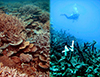
  • The ‘End of the high seas’, or we watch the seas die (based on Peter Sale's plenary session)
  • Scientists and NASA astronauts developing near real-time osteoporosis and bone cancer test (session 4d, theme Environmental Geochemistry)
  • Possible test for liver cancer using technology for analysing rocks and minerals (session 4d, theme Environmental Geochemistry)
  • Research shows that comet impacts may have led to life on Earth — and perhaps elsewhere (session 22a, theme Early Earth: Earth's History before the Phanerozoic)
  • The unbearable lightness of helium may not be such a problem after all (session 13f, theme Energy Resources)

Society News

EAG Photo Contest: a chance to win a 5-year EAG membership

EAG Photo Contest: a chance to win a 5-year EAG membership

Winners of the EAG Photo Contest receive a 5-year EAG membership, providing reduced rates to the next 5 Goldschmidt conferences, subscription to Elements Magazine, Geochemical Perspectives, Geochemical Perspectives Letters and more. The winning photos are also widely advertised (with appropriate credit) on the EAG website, newsletter and in Elements.

This year's themes are:

  • The spirit of the Goldschmidt2015 conference
  • What is geochemistry for you?
  • Earth, Fire, Air, Water

Submit your photo before 31 October (one photo pax. per theme).
2016 Awards: time to send your nomination

2016 Awards: time to send your nomination

If you know of scientists who deserve recognition, please nominate them for an EAG Award or for the EAG-GS Fellowship. The process is simple and the different awards recognize scientists at various stages of their career:

  • Houtermans Award for scientists under 35 or within 6 years of their PhD
  • Science Innovation Award (named after Ted Ringwood for his work in petrology and mineral physics) for scientists between 35 and 55
  • Urey Award, recognizing scientific excellence over a career
  • EAG-GS Geochemical Fellowship, recognizing scientists who have made major contributions to the field of geochemistry.

Please send your nomination before 31 October for EAG-GS Fellows and before 15 November for all other awards.
Elements August issue: mailing problems outside the US

Elements August issue: mailing problems outside the US

The Elements editorial office has informed us that a replacement copy of the August issue of Elements will be shipped to all members affected by the recent labeling problem (names and addresses incorrectly matched). The replacement copy will be shipped along with the upcoming October issue.

If you didn't receive the August issue, we are sorry for the delay in getting this print copy to you. While waiting for the replacement copy to arrive, we encourage you to check out the issue on Elements Online or on GeoScienceWorld.

If you received an incorrectly labeled August issue, you do not need to forward your copy to the "named" colleague nor do you need to contact us. It's yours to keep! When you receive the replacement copy, we encourage you to give that second copy to a student or colleague. Elements is a terrific way to draw the interest from our broader community towards the exciting world of mineralogy, petrology, and geochemistry.

Early Career Science Ambassador Program

Early Career Science Ambassador Program

The Early Career Science Ambassador Program supports scientists based in Europe, in the final stages of their PhD or within 6 years post PhD, to attend conferences outside Europe, by covering 50% of their expenses, up to 2000 Euros. The next application deadline is 1 October.

EAG Publications

Natural Resources in a Planetary Perspective

Natural Resources in a Planetary Perspective

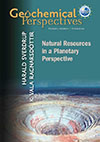
The new Geochemical Perspectives issue, 'Natural Resources in a Planetary Perspective' by Harald Sverdrup & K. Vala Ragnarsdóttir, surveys the current global resources of elements and energy. Using models based on biophysical economic principles they provide estimates of the total global supply of these resources and how long these supplies will last. What is most remarkable is how many of these resources critical to society will be declining in availability over the next few decades. By surveying historic evidence they show how resources are linked to the wealth of nations and prospering societies, and how the loss of basic resources will alter society. Sverdrup and Ragnarsdóttir continue by providing recommendations of that effective resource recycling and management policies are needed to provide a sustainable world for future generations.

EAG Blogosphere

 EAG Ambassador in Woods Hole

EAG Ambassador in Woods Hole

[By Steffi Lutz] Thanks to the support from the European Association of Geochemistry I was able to attend the Molecular Evolution workshop which took place from the 19th to 29th of July at the Marine Biological Laboratory in Woods Hole, Massachusetts. Woods Hole is a very picturesque place at the extreme southwest corner of Cape Cod and the site of a large number of marine science institutions. Read more

EAG sponsored student in Odense

EAG sponsored student in Odense

[By Andrea Vidal] The Aquatic Microbial and Molecular Ecology (AMME) course has been held at the University of Southern Denmark (Odense University before it merged with other institutions) since 1992. It started as a MSc course and it turned into a PhD course in 2000. I was looking for some interesting courses to learn new lab techniques and... Read more

Geochemistry making the news

Southern Ocean sucks up more carbon dioxide than was thought

Southern Ocean sucks up more carbon dioxide than was thought

[Nature] The Southern Ocean, which each year soaks up billions of tonnes of carbon dioxide from the atmosphere, has reversed a worrying decline in its annual intake of the greenhouse gas. The finding comes as little surprise to climate scientists, who thought it inevitable that at some point the vast ocean around Antarctica would start absorbing more CO2 as atmospheric concentrations of the gas rise. Read more

Metal-eating microbes in African lake could solve mystery of...

Metal-eating microbes in African lake could solve mystery of...

[Science Daily] Metal-eating microbes in African lake could solve mystery of the planet's iron deposits. According to University of British Columbia (UBC) research [...], 30 per cent of the microbes in the Democratic Republic of the Congo's Kabuno Bay grow by a type of photosynthesis that oxidizes (rusts) iron rather than converting water into oxygen like plants and algae. Read more

Radioactive contaminants found in coal ash

Radioactive contaminants found in coal ash

[Science Daily] A new Duke University-led study has revealed the presence of radioactive contaminants in coal ash from all three major U.S. coal-producing basins. The study found that levels of radioactivity in the ash were up to five times higher than in normal soil, and up to 10 times higher than in the parent coal itself because of the way combustion concentrates radioactivity. Read more

What Happened to Early Mars' Atmosphere?

What Happened to Early Mars' Atmosphere?

[Nasa JPL] What Happened to Early Mars' Atmosphere? New Study Eliminates One Theory. Scientists may be closer to solving the mystery of how Mars changed from a world with surface water billions of years ago to the arid Red Planet of today. A new analysis of the largest known deposit of carbonate minerals on Mars suggests that the original Martian atmosphere may have already lost most of its carbon dioxide by the era of valley network formation. Read more

Ironing out glacial sediment reactivity on I08

Ironing out glacial sediment reactivity on I08

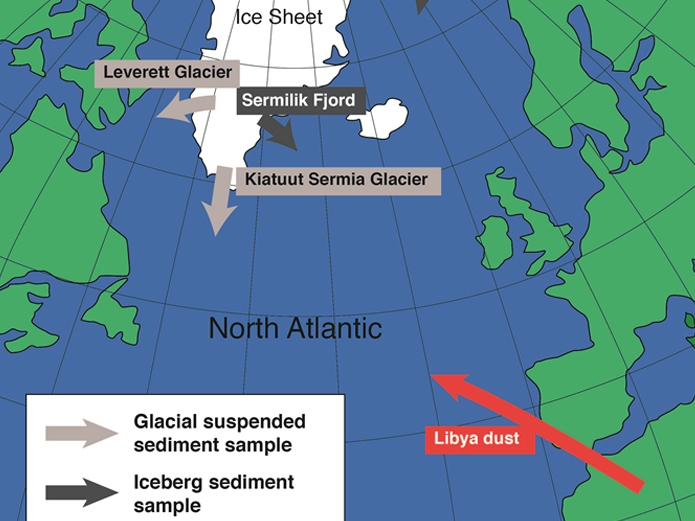
[Diamondnews] It is well known that around 30-50% of Earth’s oceans are iron deprived1 and the availability of iron in our oceans impacts the growth of phytoplankton – photosynthesising microscopic marine organisms. The life cycle of marine phytoplankton is very important in that they control many biogeochemical cycles, among which the global carbon cycle is of prime importance. Microscopic organisms phytoplankton are at the bottom of the oceanic food chain... Read more

New Pluto Images from NASA’s New Horizons: It’s Complicated

New Pluto Images from NASA’s New Horizons: It’s Complicated

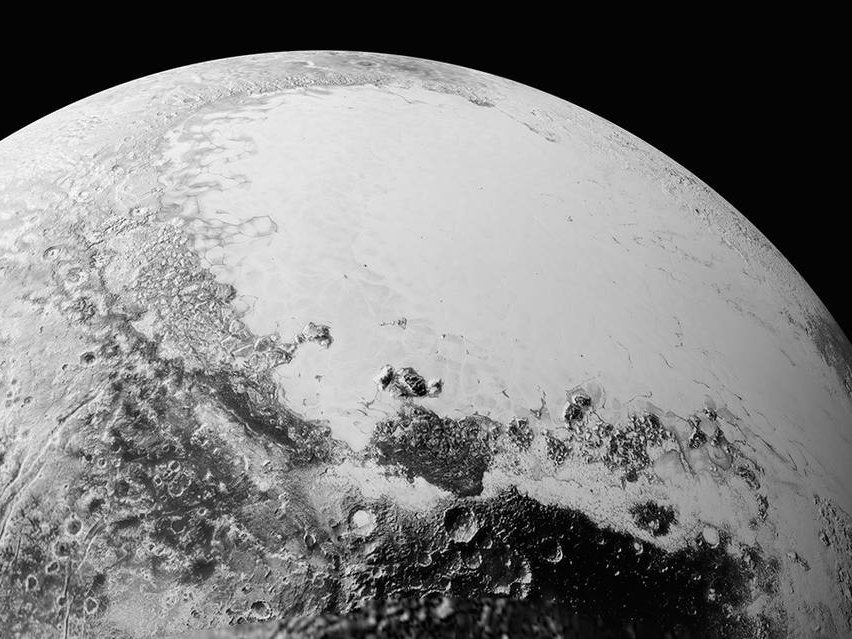
[Nasa] New close-up images of Pluto from NASA’s New Horizons spacecraft reveal a bewildering variety of surface features that have scientists reeling because of their range and complexity. “Pluto is showing us a diversity of landforms and complexity of processes that rival anything we’ve seen in the solar system,” said New Horizons Principal Investigator Alan Stern... Read more

Job opportunities

Check the latest job opportunities

Check the latest job opportunities

Receive job ads as they are posted: like us on Facebook or follow us on Twitter (@EAG_). Post a position on the EAG job page (free of charge): send the details to EAG Office.

  • 17 PhD positions for the project “EarthShape” - Various locations in Germany
  • PhD position ‘Early metal-silicate differentiation processes in small bodies of the solar system: integrative approach based on numerical modelling, petrological and geochemical data’ - Observatoire Midi-Pyrénées, Toulouse, France
  • 2016 Exploration Postdoctoral Fellowship - Arizona State University
  • Postdoc position in Geomicrobiology ‘Iron mineral formation by mixed communities of iron(II)-­oxidizing bacteria in modern sedimentary habitats and on early Earth’ - University of Tübingen
  • Professor or Assistant Professor (Tenure Track) of Experimental Geochemistry/Mineral Physics - ETH Zurich, Switzerland
  • Two Tenure-track Assistant Professors and Full Professor Chairperson in Environmental Geosciences - Central Michigan University
  • Lecturer/Reader in Earth Sciences - University of St Andrews
  • University Academic Fellow – Environmental Biogeochemistry and University Academic Fellow – Vertebrate Palaeontology - University of Leeds
  • Faculty Positions-Marine Biology, Oceanography, Earth, Polar and Atmospheric Sciences - Scripps Institution of Oceanography

Conferences

Upcoming deadlines for geochemistry related conferences

Upcoming deadlines for geochemistry related conferences

  • GSA 2015: Registration deadline 28 September
  • 6th International Conference on Future Environment and Energy (ICFEE 2016): Abstract deadline 10 October
  • AGU Fall Meeting 2015: Reduced rates housing deadline 12 November

See all upcoming conferences and workshops.

We thank you for your attention

Subscribe | Unsubscribe | Previous issues
Advertise in the EAG newsletter
Copyright © European Association of Geochemistry | Credit banner image: David Benavente, 2017 Photo Contest Winner