EAG Newsletter
Join / Renew | Membership benefits | Member login
Contact Facebook Twitter YouTube
European Association of Geochemistry EAG Blog EAG Comic

Goldschmidt2018

Perspectives Letters

Perspectives

Partners

January 2015

Society news

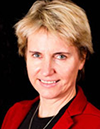
EAG welcomes Liane G. Benning as new president

EAG welcomes Liane G. Benning as new president

The EAG Council would like to welcome Liane G. Benning, University of Leeds and German Research Center for Geosciences, as the new EAG President. Liane has been involved with the society for over six years, first serving in the council as Chair of the Communications Committee, Secretary then Vice-President and lately as founding editor of Geochemical Perspectives and Geochemical Perspectives Letters. Liane's energy and dedication to the society have been fundamental to the growth of the EAG.

The EAG Council also welcomes Bernard Marty as Vice-President, Antje Boetius as Goldschmidt Officer, Stefanie Lutz as Early Career Councillor and Sigurður Gíslason, Andreas Pack and Dominik Weiss as the 3 new councillors you have elected. Finally, the EAG wishes to thank departing councillors Michael Bau, Bernard Bourdon, Christa Göpel and Amaelle Landais for their time and services.


EAG-GS Outreach Lecturer in Niger this month

EAG-GS Outreach Lecturer in Niger this month

After reaching already 470 students in Madagascar, Cameroon and Chad as part of the EAG-Geochemical Society Outreach Program, Lecturer Pierre Deschamps (CEREGE, France) is currently at the University Abdou Moumouni of Niamey in Niger. For more information about this program, visit the Outreach webpage.

EAG membership: time to join or renew

EAG membership: time to join or renew

If you haven't renewed your membership yet or if you're considering joining the EAG, now is the time! Our membership is calendar year (and you can also register for several years) so take full advantage of our society benefits now:

  • Reduced registration fees at Goldschmidt conferences
  • Subscription to Elements Magazine (in print and online)
  • Subscription to Geochemical Perspectives (in print and online)
  • Coming up soon, subscription to Geochemical Perspectives Letters (in print and online)
  • Reduced subscription rates for Chemical Geology and Geofluids
  • Sponsorship of member-led short courses and conferences
  • Sponsorship of students attending short courses and conferences in Europe
  • Through the Early Career Science Ambassador Program, travel grants for Early Career Scientists based in Europe to attend conferences outside of Europe
  • Member rates for print publications of Mineralogical Society of Great Britain and Ireland, Italian Geological Society and French Quaternary Association

Lecture Weathering, ocean chemistry and climate change...

Lecture Weathering, ocean chemistry and climate change...

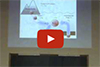
As part of the EAG Distinguished Lecture Program 2014, Dr. Rachael James (University of Southampton) presented the lecture "Weathering, ocean chemistry and climate change: New insights from non-traditional metal stable isotopes" at the University Babes-Bolyai University, Cluj-Napoca, Romania. You can now watch the video of the lecture.

In Memoriam: Robert Berner

In Memoriam: Robert Berner

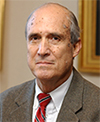
[Jay J. Ague] Dear G&G Community: I write to bring you the sad news that Robert A. Berner, Emeritus Professor of Geology and Geophysics, passed away as a result of pneumonia this weekend. We extend our deepest, heartfelt condolences to his family at this most difficult time.

Bob got his B.S. and M.S. degrees from the University of Michigan, and his Ph.D. from Harvard. He did a postdoc at the Scripps Institution of Oceanography before moving to the University of Chicago as an Assistant Professor in 1963. He came to Yale in 1965, and stayed here for the rest of his career. Read more on Geochemical News | Read more on Yale News

Goldschmidt conferences

Future Goldschmidt conferences

Future Goldschmidt conferences

The European Association of Geochemistry and the Geochemical Society, co-owners of the Goldschmidt conference, are excited to announce the locations of future meetings:

  • Goldschmidt2016 will be in Yokohama, Japan (26 June - 1 July)
  • Goldschmidt2017 will be Paris, France (13-18 August)

Please mark these dates in your calendar. We hope to see many of you there.

Publications

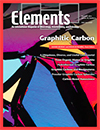
Elements December issue: Graphitic Carbon

Elements December issue: Graphitic Carbon

Graphitic carbon, with its diverse structures and unique properties, is everywhere at the Earth’s surface. Strategically located at the interface between the lithosphere, biosphere, hydrosphere, and atmosphere, graphitic carbon constitutes a major terrestrial carbon reservoir. Natural and synthetic graphitic carbon is also used in a broad range of applications. Graphitic carbon has played an important role in human history (for example, coal mining) and is now a building block of nanotechnology, but this remarkable material is also an active player in geological processes.

EAG members will receive their print copy shortly and have online access to all issues of Elements (user id = email address, password = EAG membership number). To verify your postal address or your membership number, login to your member area.

EAG Blogosphere

 Wonders of the East

Wonders of the East

[By Rachael James] It was a surprise and honour to be asked to deliver the EAG Distinguished Lecture Tour 2014, and to be given the opportunity to connect with Geochemists working in Eastern Europe. In recent years my research has focused on applying an isotope geochemistry toolkit to a range of environmental issues, from assessing the links between gas hydrates, climate change and methane emissions from the seafloor in the Arctic... Read more

Dirty snowballs and our origins

Dirty snowballs and our origins

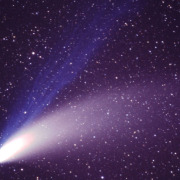
[By Graciela Matrajt] Have you ever imagined how a person with long hair would look floating in the outer space? Ancient Greeks did. When they perceived comets in the sky they imagined them as a face with long hair floating in space. In fact, the word “comet” in Greek means “wearing long hair” or “long-haired star.” Today we know that comets are not stars and do not have hair, but they remain one of the most beautiful and mysterious objects we can admire in the sky. Read more

Midterm review in Seefeld, Austria

Midterm review in Seefeld, Austria

[Sandy Boehnert] The third meeting of the CO2 React Network took place from the 04th to the 09th of December, 2014, in a little skiing village in Austria – Seefeld. Most of the PhD students had only started a year ago, so it was a little intimidating to realize that this meeting was actually the mid-term review for the EU project. Read more

Geochemistry making the news

Lost Beagle2 probe found 'intact' on Mars

Lost Beagle2 probe found 'intact' on Mars

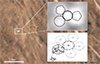
[BBC News] The missing Mars robot Beagle2 has been found on the surface of the Red Planet, apparently intact. High-resolution images taken from orbit have identified its landing location, and it looks to be in one piece. The UK-led probe tried to make a soft touchdown on the dusty world on Christmas Day, 2003, using parachutes and airbags - but no radio contact was ever made with the probe. Read more

Here are the countries most likely to survive climate change

Here are the countries most likely to survive climate change

[Science Alert] As the effects of climate change march on while governments around the world drag their feet to mitigate them, researchers are trying to figure out who is most at risk as things get inevitably worse. For this purpose, a team at the University of Notre Dame in the US has created the ND-Gain Index, based on data collected since 1995 measuring 192 UN countries according to two variables - vulnerability to the effects of climate change and readiness to adapt. Read more

Iron toxicity for cyanobacteria delayed oxygen accumulation...

Iron toxicity for cyanobacteria delayed oxygen accumulation...

[Science Daily] Iron toxicity for cyanobacteria delayed oxygen accumulation in early Earth's atmosphere. Three billion years ago, Earth's atmosphere contained less than 0.0001 percent oxygen. Today's atmosphere has around 20 percent oxygen -- and that is due to the work of tiny microorganisms in Earth's primeval oceans. Cyanobacteria, which still exist in a similar form today, probably started using energy from sunlight to photosynthesize some of the carbon dioxide in the atmosphere into organic compounds. Read more

 Sea level rise: Models and observations are starting to agree

Sea level rise: Models and observations are starting to agree

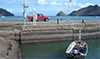
[Science] Climate change models have typically underestimated the amount of sea level rise observed over the past century. The difference could point to a problem with the models, which attempt to account for effects such as the loss of glaciers and ice caps and the fact that a warming ocean takes up more space. Or it could simply be an artifact of sea level records from tide gauges (pictured), which are particularly spotty in the early part of the 20th century. Read more

First atomic blast proposed as start of Anthropocene

First atomic blast proposed as start of Anthropocene

[Nature News] For historians, the first atomic bomb blast in 1945 ushered in the nuclear age. But for a group of geologists, the 16 July test at Alamogordo, New Mexico, marks the start of a new unit of geological time, the Anthropocene epoch. The term Anthropocene was coined 15 years ago to refer to the age of widespread human influence over the planet. Read more

Job opportunities

Check the latest job opportunities

Check the latest job opportunities

Receive job ads as they are posted: like us on Facebook or follow us on Twitter (@EAG_). Post a position on the EAG job page (free of charge): send the details to EAG Office.

  • Chief Operating Officer for The Geochemical Society - Geochemical Society Business Office at the Carnegie Institution
  • Research positon in atomistic simulations of minerals and mineral-fluid interfaces - University of Bern
  • Lecturer/Senior Lecturer in Benthic Biogeochemistry - SAMS, Oban
  • PhD position in atmospheric chemistry ‘Aging of pollution aerosols: an analytical microscopy study’ - The “Opal-Coast” University
  • PhD opportunities in atmospheric geochemistry and cloud formation - University of Leeds
  • MSc, PhD and Postdoctoral opportunities with the Multidisciplinary Applied Geochemistry Network Research Themes: Fragile Ecosystems; Windows into the Earth; Hidden Resources - Multiple universities in Canada
  • PhD topics on the theme of Mantle Volatiles - 6 UK universities
  • PhD topics related to Rift Volcanism in Ethiopia - 6 UK universities
  • PhD position in Earth Science ‘Integration of Geodiversity into Ecosystem Services Frameworks’ - University of St Andrews
  • PhD position in biogeochemistry ‘Understanding coral survival in a warmer world; the role of historic coral bleaching’ - University of Glasgow
  • PhD position in nutrient biogeochemistry ‘Cycling and burial of the nutrients phosphorus and nitrogen in coral reef deposits’ - Newcastle University
  • Graduate Assistantship in Microbial Ecology - Texas A&M University
  • PhD position in isotope geochemistry ‘Out of this world! Sulfur cycling in Rio Tinto, Andalucia, Spain: an Earth analogue for extraterrestrial environments’ - University of Stirling
  • Postdoctoral opportunity in hydro-­environmental modeling of Andean basins - University of Chile
  • Postdoc position in diffraction tomography - Aarhus University
  • Post-doc in radiogenic isotope geochemistry - Washington State University
  • Postdoctoral position in experimental petrology/geochemistry - CRPG Nancy
  • Post-Doctoral Fellowship or Research Associateship – Geochemical Data Integration - CMIC-NSERC, Laurentian University
  • Postdoctoral position in biogeochemistry - IPGP
  • 5 Postdoctoral research fellowships - Laboratoire Magmas et Volcans

Conferences

Upcoming deadlines for geochemistry related conferences

Upcoming deadlines for geochemistry related conferences

  • CGHERA 2015: Abstract deadline 30 January
  • ICOBTE: Abstract deadline 30 January
  • IUGG General Assembly 2015: Abstract deadline 31 January
  • GSA 2015: call for sessions deadline 1 February
  • 11th Applied Isotope Geochemistry Conference : Manuscript submission deadline 1 March (conference co-sponsored by the European Association of Geochemistry)

See all upcoming conferences.

We thank you for your attention

Subscribe | Unsubscribe | Previous issues
Advertise in the EAG newsletter
Copyright © European Association of Geochemistry | Credit banner image: David Benavente, 2017 Photo Contest Winner