EAG Newsletter
Join / Renew | Membership benefits | Member login
Contact Facebook Twitter YouTube
European Association of Geochemistry EAG Blog EAG Comic

Goldschmidt2018

Perspectives Letters

Perspectives

Partners

November 2014

Goldschmidt2015

Call for Sessions: deadline is 15 December

Call for Sessions: deadline is 15 December

Goldschmidt2015 (16-21 August) will be the 25th Goldschmidt conference, and to celebrate we are returning to beautiful Prague, the same venue as Goldschmidt2011. The Goldschmidt conference is the most important forum for the discussion of recent results in geochemistry and related fields.

The science committee has identified the key theme areas, and the theme convenors have proposed a range of sessions in each theme. Now the whole community is invited to view the sessions already proposed, and make suggestions for further sessions before 15 December. Any additional sessions you might propose should be broad enough to attract at least 25 abstract submissions, and the approval of all proposed organisers should be confirmed before your proposal is submitted.

Call for Workshops, Short Courses and Town Hall Meetings

Call for Workshops, Short Courses and Town Hall Meetings

Workshops are a great opportunity to teach valuable skills or share new techniques, and over 400 delegates are expected to participate in workshops during the weekend before Goldschmidt2015. The Goldschmidt conferences are one of the best annual opportunities to reach the community and the conference office will manage the provision of rooms, audiovisual equipment, catering, delegate bookings and payments: all workshop organisers need to do is publicise their workshop and prepare their materials. If you are interested in running a workshop, short course or town hall meeting then please submit a proposal before 15 December.

Society news

Elected councillors

Elected councillors

New councillors

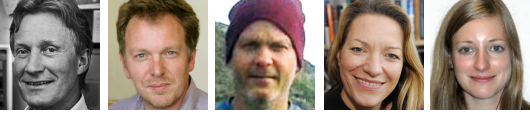
EAG council elections were held in October. We would like to thank all members who took the time to vote and express our gratitude to the 6 candidates who participated. Out of these candidates Sigurður Reynir Gíslason (University of Iceland), Andreas Pack (University of Göttingen) and Dominik Weiss (Imperial College London) were elected and will join the council in 2015 along with the existing council members:

Janne Blichert-Toft, Vinciane Debaille, Britta Planer-Friedrich, Maria Schönbächler, Nathalie Vigier, Karim Benzerara, Dan Frost, Ruben Kretzschmar, and officer councillors Liane Benning, Chris Ballentine, Andreas Kappler and Eric Oelkers.

Furthermore the council has also elected Antje Boetius (HGF-MPG Group for Deep Sea Ecology and Technology, Alfred Wegener Institute Helmholtz Centre for Polar and Marine Research and Max Planck Institute for Marine Microbiology) as a new Goldschmidt Officer and Stefanie Lutz (University of Leeds) as the first Early Career Councillor. We would like to wish all our new councillors a very warm welcome!
EAG-GS Outreach Lecturer in Cameroon this month

EAG-GS Outreach Lecturer in Cameroon this month

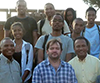
As the Outreach Program developed by the EAG and the Geochemical Society continues, this month, Pierre Deschamps will be visiting 3 universities in Cameroon, giving lectures and seminars on Climate Change and its impact on the African continent, Sea-level variations and Groundwater dating. Pierre will then be at the University of N'Djamena, Chad, early December. For more information, visit the Outreach webpage.
EAG Distinguished Lecturer heading to Romania and Bulgaria

EAG Distinguished Lecturer heading to Romania and Bulgaria

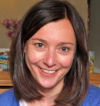
After a first lecture in Prague (Czech Republic) earlier this month, Rachael James, 2014 EAG Distinguished Lecturer, will be giving lectures on ocean chemistry and climate change at:

  • the Romanian Academy in Bucharest on 24 November
  • the Babes-Bolyai University in Cluj-Napoca (Romania) on 26 November
  • the Sofia University (Bulgaria) on 28 November

These are public lectures, so staff, students and visitors are welcome to attend; see tour and lecture details.
Society synergy HGS- EAG

Society synergy HGS- EAG

As EAG continues to build partnerships within Europe, we are very happy to report signing a Memorandum of Understanding with the Hungarian Geological Society (HGS). HGS members now enjoy the same terms and conditions for organizing society events and registering at European Goldschmidt conferences as EAG members. On registering for European Goldschmidts, HGS members will also be given complimentary EAG membership. HGS will in turn promote our sponsored events and the Goldschmidt conference.
EAG Blogosphere

 Philae landed on comet 67P: follow the news

Philae landed on comet 67P: follow the news

[By Juan Diego Rodriguez Blanco] On November 12, 2014 and after 10 years of travel, the European Space Agency (ESA) carried out the first unmanned descent and landing on the surface of a comet’s nucleus. Here you can find some links to follow this mission and get detailed information about Rosetta and Philae. The Philae lander detached from Rosetta spacecraft and performed a soft landing on a selected area –recently named Agilkia– of comet 67P Churyumov-Gerasimenko. This was not a fast landing event, like the Curiosity rover on 2012. Actually was a complicate manoeuvre and pretty slow (7-hour) descent. Read more

Ironing out a few problems at Beamline I08

Ironing out a few problems at Beamline I08

[By Jon Hawkings] From the 15th to the 19th of October synchrotron veteran Liane G. Benning (University of Leeds), the “iron man” legend Rob Raiswell (University of Leeds) and myself (a PhD student in glaciology at the University of Bristol) joined the I08 beamline A-team of Burkhard Kaulich, Majid Abyaneh and Tohru Araki at the Diamond Light Source, on our search for iron nanoparticles in Arctic glacial samples. Read more

Geochemistry making the news

Rosetta: Comet probe Philae now stable

Rosetta: Comet probe Philae now stable

[BBC News] The robot probe Philae that made a historic comet landing is now stable after initially failing to attach to the surface, the BBC has learnt. Pictures are coming back from the craft as scientists debate how to proceed. European Space Agency engineers working on the lander say it may have bounced hundreds of metres back up off the surface after first touching down. Read more

Inexpensive, easy way to filter arsenic from water

Inexpensive, easy way to filter arsenic from water

[Science Daily] A quick, cheap and easy way has been developed to filter from water one of the world’s most common pollutants: arsenic. Arsenic is one of the most common environmental pollutants, finding its way into drinking water supplies through natural or humanmade sources and affecting millions of people worldwide. Read more

 Very old rocks reveal hot spot of sulfur-breathing bacteria

Very old rocks reveal hot spot of sulfur-breathing bacteria

[Science Daily] Biogeochemical signals in 2.5-billion-year-old carbonate rocks from Brazil reveal that sulfur-consuming bacteria were active at a time when ocean sulfur levels were low. Geologists focused on sulfur isotopes in ancient carbonate rocks. The study sheds light on Earth's early atmospheric chemistry. Read more

Mystery of Earth's Water Origin Solved

Mystery of Earth's Water Origin Solved

[National Geographic] Where do the oceans come from? The study headed by Adam Sarafian of the Woods Hole Oceanographic Institution (WHOI) in Woods Hole, Massachusetts, found that our seas may have arrived much earlier on our planet than previously thought. The study pushes back the clock on the origin of Earth's water by hundreds of millions of years, to around 4.6 billion years ago, when all the worlds of the inner solar system were still forming. Read more

Best image of a newly-forming planet system

Best image of a newly-forming planet system

[Alma Observatory] A new image from ALMA, the Atacama Large Millimeter/submillimeter Array, reveals extraordinarily fine detail that has never been seen before in the planet-forming disc around a young star. ALMA’s new high-resolution capabilities were achieved by spacing the antennas up to 15 kilometers apart. Read more

Job opportunities

Check the latest job opportunities

Check the latest job opportunities

Receive job ads as they are posted: like us on Facebook or follow us on Twitter (@EAG_). Post a position on the EAG job page (free of charge): send the details to EAG Office.

  • PhD position in Geomicrobiology ‘Iron reduction by Clostridium acetobutylicum‘ - EPFL
  • PhD-project in soil science ‘Mechanistic understanding of soil functions by submicron scale analyses with NanoSIMS’ - Technische Universität München
  • 2 PhD positions in Soil Environmental Chemistry - ETH Zurich
  • Postdoc position in marine biogeochemistry - Aarhus University
  • Postdoctoral Research Opportunity in Metal Isotope Geochemistry - Indiana University
  • Postdoctoral Fellow ‘Re-Os geochemistry, shale, hydrocarbons, stratigraphy, sedimentology’ - Colorado State University
  • Professor in Geomicrobiology - Aarhus University
  • Academic Fellowship Opportunity – Biogeochemical Modelling - University of Leeds
  • Assistant Professor and Associate Professor positions - University of Chicago
  • Tenure Track Position in Geomaterials - Temple University
  • Tenure-track position in high-T geochemistry, isotope geochemistry, or cosmochemistry - Washington University in St. Louis

More jobs at www.eag.eu.com/jobs.

Thank you for your attention!

Subscribe | Unsubscribe | Previous issues
Advertise in the EAG newsletter
Copyright © European Association of Geochemistry | Credit banner image: David Benavente, 2017 Photo Contest Winner