EAG Newsletter
Join / Renew | Membership benefits | Member login
Contact Facebook Twitter YouTube
European Association of Geochemistry EAG Blog EAG Comic

Goldschmidt2018

Perspectives Letters

Perspectives

Partners

April 2014

Goldschmidt conference

Goldschmidt2014 next deadline: 8 May

Goldschmidt2014 next deadline: 8 May

If you are going to Goldschmidt2014 and are not registered yet, note that online pre-registration closes on 8 May. Also, no less than 12 workshops and 6 social events (ranging from water rafting to classical concert, including the traditional conference dinner) are proposed to delegates, so to avoid any disappointment, make your booking before 8 May.

Society news

EAG Photo Contest now  open

EAG Photo Contest now open

We are excited to announce that the EAG Photo Contest is now open for submission! This contest is open to everyone and until 15 June, participants can submit one photo per theme:

  • The changing world: geochemistry in action
  • Geochemistry and life
  • Geochemistry in a test tube

The winners of each theme will receive a 5-year complimentary EAG membership (see membership benefits), publication of their photos on the EAG website and newsletters. The overall winner's photo will also be published in Elements Magazine.
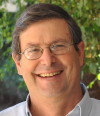
Dan Yakir receives the EAG Eminent Speakers Award

Dan Yakir receives the EAG Eminent Speakers Award

Each year, the EAG presents the Eminent Speakers Award at the EGU General Assembly. EAG is proud to announce Prof. Dan Yakir as recipient of the Eminent Speakers Award 2014. Dan's research focuses on the interactions between biosphere, atmosphere and climate with a special attention to the semi-arid regions. He has developed very early the use of stable isotopes to trace carbon and water fluxes at the scale of leaf and soil to the global scale. This award will be presented on Tuesday 29 April (13:45 Room B7) at EGU General Assembly 2014 in Vienna, Austria.

EAG co-sponsors six sessions at EGU 2014

EAG co-sponsors six sessions at EGU 2014

In order to promote geochemistry at the upcoming European Geosciences Union General Assembly in Vienna (27 April – 2 May), EAG proudly co-sponsors six geochemistry related sessions. These sessions highlight the importance of geochemistry in various fields such as mineralogy, biogeoscience, water cycle, atmospheric science and sedimentology.
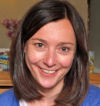
Invite the Distinguished Lecturer 2014 to your institution

Invite the Distinguished Lecturer 2014 to your institution

As previously announced, Dr. Rachael James, University of Southampton, has been selected as the EAG Distinguished Lecturer 2014. Her research focuses on the development and application of chemical and isotopic techniques to improve our understanding of earth and planetary processes- both now and in the past.

Institutions in Central and Eastern Europe interested in Rachael's research, can apply to invite her to present one or two lectures. The proposed lectures are (view lecture abstracts):

  • Weathering, ocean chemistry and climate change: New insights from non-traditional metal stable isotopes
  • Linkages between methane release from Arctic shelf sediments and climate change
  • Monitoring and impacts of leakage from sub-seafloor CO2 storage sites
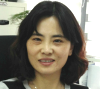
Liping Qin, EAG medallist, interviewed by Nature

Liping Qin, EAG medallist, interviewed by Nature

Liping Qin, medallist of the EAG Houtermans Award 2014, recognizing a single exceptional contribution to geochemistry by an early-career scientist, provides a unique insight into the dynamics and rise of geochemistry in China.You can read the full story here.
EAG Press Releases

Increased climate change risk from methane...

Increased climate change risk from methane...

Increased climate change risk from methane suggested by proof of redox cycling of humic substances [EAG Press Release - 17 April 2014]

The recent Yokahama IPCC meeting painted a stark warning on the possible effects of gases such as methane – which has a greenhouse effect 32 times that of carbon dioxide. Now a team of Swiss-German researchers have shown that humic substances act as fully regenerable electron acceptors which helps explain why large amount of methane are held in wetlands instead of being released to the atmosphere. Read more

EAG Blogosphere

 Post submission protocol

Post submission protocol

[By Chris Pearce] I write this as a free man. For the last couple of months I have been bound by the single-mindedness and obsession that drives all academics in the lead up to a submission deadline. Although my latest grant application was by all accounts a bit of a beast, the focus and determination required to see it through were by no means unique; I’ve worked through many similar late-night sessions during previous grant applications, manuscript submissions and of course when writing my thesis... Read more

Call for bloggers

Call for bloggers

We've had many wonderful contributions on the EAG Blog since its creation and we are looking to expand our team of bloggers. We therefore invite scientists wishing to share their experiences and insights to contact the EAG Office.

Geochemistry making the news

How to save the planet: Moon mining, iron filings and fake...

How to save the planet: Moon mining, iron filings and fake...

[The Telegraph] How to save the planet: Moon mining, iron filings and fake volcanoes... Moon mining for space dust; dumping iron filings in the sea, and creating an enormous space parasol are some of the most bizarre ideas put forward by scientists to tackle climate change. Read more

Increasing acidic level in oceans makes fish lose...

Increasing acidic level in oceans makes fish lose...

[French Tribune] Increasing Acidic Level in Oceans Makes Fish Lose their Survival Instinct...Yet another consequence of climate change has been revealed. Novel research has found fish lose their survival instinct when affected by acid and they look for their predators. Read more

Scientists reconstruct asteroid impact...

Scientists reconstruct asteroid impact...

[Daily Mail] Scientists have reconstructed one of the biggest asteroid impacts ever to hit Earth - and say it was six times as big as the blast than wiped out the dinosaurs. The 36 mile wide asteroid is believed to have hit Earth 3.26 billion years ago, creating unique geological features found in a South African region known as the Barberton greenstone belt. Read more

Dwarf planet discovery could help show life's spread...

Dwarf planet discovery could help show life's spread...

[Space.com] Dwarf Planet Discovery Could Help Show Life's Spread Through Solar System...On March 26, researchers announced the discovery of 2012 VP133, an estimated 280-mile wide (450-kilometer) object that lies just beyond the Kuiper Belt of icy objects that swarm outside of Neptune's orbit. Read more

Job opportunities

Check the latest job opportunities

Check the latest job opportunities

Receive job ads as they are posted: like us on Facebook or follow us on Twitter (@EAG_). Post a position on the EAG job page (free of charge): send the details to EAG Office.

  • 10 PhD positions – Marie-Curie Initial Training Network ABYSS Training network on reactive geological systems from the mantle to the abyssal sub-seafloor
  • PhD position ‘Molecular signatures in Proterozoic microorganisms at the micro- to nanometer scales’
  • Misasa International Student Internship Program in Geochemistry/Cosmochemistry
  • PhD position in Organic Geochemistry ‘Dissolved Organic Matter in Agrohydrosystems’
  • PhD position in Environmental Mineralogy & Chemistry ‘Significance of Sorption for Redox Properties and Electron Transfer Processes of Natural Organic Matter’
  • PhD Project in Geomicrobiology/Biogeochemistry ‘Competition of iron(II)-oxidizing bacteria in marine and freshwater sediments‘
  • PhD position in Ecohydrology ‘Soil Biogeochemistry Dynamics under Effects of Freezing and Thawing Cycles’
  • PhD position in Atmospheric Geochemistry ‘Mineral dust particles as the seeds of ice in clouds’
  • PhD position in Biomineralization ‘Biomineralization and electron transfer mechanisms associated with bacterial sulfate reduction’
  • 12 PhD and 2 Postdoctoral Positions in Novel Stable Isotope Environmental Geochemistry within the European Marie Curie Initial Training Network “Isotopic Tools as Novel Sensors of Earth Surfaces Resources – IsoNose”
  • 2 Post-doctoral positions in Isotope Geochemistry and Cosmochemistry
  • Post-doctoral position ‘Inferring the links between water cycle, climate and stratospheric inputs from a data-model approach combining all water isotopes and 10Be in the East Antarctica plateau.’
  • Postdoctoral opportunity in non-classical crystal growth and Nanogeosciences

More jobs at www.eag.eu.com/jobs.

Thank you for your attention

Subscribe | Unsubscribe | Previous issues
Advertise in the EAG newsletter
Copyright © European Association of Geochemistry | Credit banner image: David Benavente, 2017 Photo Contest Winner