EAG Newsletter
Join / Renew | Membership benefits | Member login
Contact Facebook Twitter YouTube
European Association of Geochemistry EAG Blog EAG Comic

Goldschmidt2018

Perspectives Letters

Perspectives

Partners

March 2014

Goldschmidt conference

8 April: early registration and field trips deadline

8 April: early registration and field trips deadline

We would like to remind you that you can benefit from lower rates at Goldschmidt2014 by registering before 8 April. EAG, GS, GSJ and AGU members also receive additional discount. Should you need your EAG membership number or check on your membership status, please contact the EAG Office.

8 April is also the deadline for booking field trips. The conference proposes ten exciting pre- and post-conference field trips exploring the geological interests of the region, ranging from 1 to 4 days.

Economy accommodation and Recruiting Student Helpers

Economy accommodation and Recruiting Student Helpers

Delegates can now book economy accommodation (dorm rooms and a limited number of shared rooms are available). Booking deadline is 8 April via the Sacramento Visitors Bureau web page. It is recommended to book quickly.

Applications for student helpers at Goldschmidt2014 are now open and must be sent before 8 April by filling in the online form. Student helpers can be employed for 4 or 6 days at $100 a day ($50 per half day) and receive free registration to the conference.

 Goldschmidt2014: Plenaries

Goldschmidt2014: Plenaries

A number of exciting plenaries are planned for Goldschmidt2014:

  • Hope Jahren (University of Hawaii at Manoa) will speak on "What can the Carbon Isotope Composition of Plant Tissue Tell us?"
  • Christopher Kim (Chapman University) and Andrea Foster (USGS) will have a joint presentation on "The Environmental Legacy of California's Gold Rush: Arsenic and Mercury Contamination from Historic Mining"
  • 2014 Gast Lecturer Tim Elliott (University of Bristol) will explain "The Implications of a Non-Chondritic Terrestrial Mg Isotope Composition"
  • Pamela Conrad (NASA, Goddard Space Flight Center) will speak on "Measuring the Habitability Potential of Mars: An Evolving State of the art"
  • EAG President Christopher Ballentine (University of Oxford) will present "When paradigms collide: Volatiles in Earth’s mantle".

Society news

Get your camera ready for the EAG Photo Contest

Get your camera ready for the EAG Photo Contest

We are excited to announce the first edition of the EAG Photo Contest, open to everyone. From 15 April, participants will be able to submit their photos relating to the themes: 'The changing world: geochemistry in action', 'Geochemistry and life' and 'Geochemistry in a test tube'. The winners of each theme will receive a 5-year complimentary EAG membership (see membership benefits), publication of their photos on the EAG website and newsletters. The overall winner's photo will also be published in Elements Magazine.

Geochemistry making the news

Crystal is 'oldest scrap of Earth crust'

Crystal is 'oldest scrap of Earth crust'

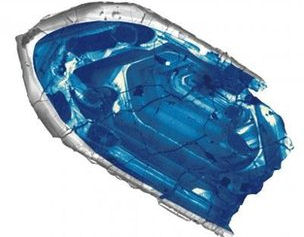
[BBC News] A tiny 4.4-billion-year-old crystal has been confirmed as the oldest fragment of Earth's crust. The zircon was found in sandstone in the Jack Hills region of Western Australia. Scientists dated the crystal by studying its uranium and lead atoms. The former decays into the latter very slowly over time and can be used like a clock. Read more

Mysterious new man-made gases pose threat to ozone layer

Mysterious new man-made gases pose threat to ozone layer

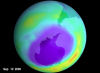
[BBC News] Scientists have identified four new man-made gases that are contributing to the depletion of the ozone layer. Two of the gases are accumulating at a rate that is causing concern among researchers. Worries over the growing ozone hole have seen the production of chlorofluorocarbon (CFC) gases restricted since the mid 1980s. But the precise origin of these new, similar substances remains a mystery, say scientists. Read more

Water-rich gem points to vast 'oceans' beneath Earth's surface,

Water-rich gem points to vast 'oceans' beneath Earth's surface,

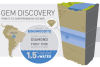
[Science Daily] An international team of scientists led by Graham Pearson (University of Alberta), has discovered the first-ever sample of a mineral called ringwoodite. Analysis of the mineral shows it contains a significant amount of water - 1.5 per cent of its weight - a finding that confirms scientific theories about vast volumes of water trapped 410 to 660 kilometres beneath Earth's surface, between the upper and lower mantle. Read more

Mineral hints at bright blue rocks deep in the Earth

Mineral hints at bright blue rocks deep in the Earth

[BBC News] Minerals preserved in diamond have revealed hints of the bright blue rocks that exist deep within the Earth. They also provide the first direct evidence that there may be as much water trapped in those rocks as there is in all the oceans. The diamond, from central-west Brazil, contains minerals that formed as deep as 600km down and that have significant amounts of water trapped within them. Read more

Dinosaur-Killing Asteroid Triggered Lethal Acid Rain

Dinosaur-Killing Asteroid Triggered Lethal Acid Rain

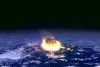
[Live Science] The oceans soured into a deadly sulfuric-acid stew after the huge asteroid impact that wiped out the dinosaurs, a new study suggests. Eighty percent of the planet's species died off at the end of the Cretaceous Period 65.5 million years ago, including most marine life in the upper ocean, as well as swimmers and drifters in lakes and rivers. Read more

Job opportunities

Check the latest job opportunities

Check the latest job opportunities

Receive job ads as they are posted: like us on Facebook or follow us on Twitter (@EAG_). Post a position on the EAG job page (free of charge): send the details to EAG Office.

  • PhD position ‘Role of organo-mineral phases of soil as a reservoir of nutrient elements: Coupled Ca-Sr-C-Li isotope approach’
  • PhD position in Ecohydrology ‘Soil Biogeochemistry Dynamics under Effects of Freezing and Thawing Cycles’
  • PhD position in Isotope Geochemistry ‘From a modern highly mineralized spring – Arvadi spring, Switzerland – to the Paleoproterozoic ocean: an isotope geochemical and mineralogical investigation’
  • PhD position in Atmospheric Geochemistry ‘Mineral dust particles as the seeds of ice in clouds’
  • PhD position in Biomineralization ‘Biomineralization and electron transfer mechanisms associated with bacterial sulfate reduction’
  • 2 Post-doctoral positions in Isotope Geochemistry and Cosmochemistry
  • Post-doctoral position ‘Inferring the links between water cycle, climate and stratospheric inputs from a data-model approach combining all water isotopes and 10Be in the East Antarctica plateau.’
  • 2 Post-doctoral positions ‘Mineral Self-Assembly and Chemical Coupling’ and ‘Pattern Formation in Alkaline Geochemistry’
  • Faculty Position in Experimental Earth Science

More jobs at www.eag.eu.com/jobs.

Thank you for your attention

Subscribe | Unsubscribe | Previous issues
Advertise in the EAG newsletter
Copyright © European Association of Geochemistry | Credit banner image: David Benavente, 2017 Photo Contest Winner