
EAG Newsletter
Join / Renew | Membership benefits | Member login
Contact Facebook Twitter YouTube
European Association of Geochemistry EAG Blog EAG Comic

Goldschmidt2018

Perspectives Letters

Perspectives

Partners

January 2014

Deadlines coming up

Goldschmidt2014: abstract deadline is 8 February

Goldschmidt2014: abstract deadline is 8 February

Abstract submission and registration for Goldschmidt2014 are now all live. Abstract submission will remain open until 8 February and early registration will end on 8 April.

More than 170 sessions in 26 themes covering the whole range of geochemistry and related fields have been organised. Each delegate may submit two abstracts as a presenting author, though (unless they are a keynote speaker) only one of these may be submitted with a preference for oral presentation. Keynote speakers may submit two abstracts with a preference for oral presentation.

Society news

Edward Boyle receives the 2014 Urey Award

Edward Boyle receives the 2014 Urey Award

The EAG is proud to announce Edward Boyle, Massachusetts Institute of Technology, as medallist of the 2014 Urey Award, recognizing outstanding contributions to geochemistry over a career. Edward Boyle is a marine geochemist working on the distribution of trace elements in the ocean and their use as paleochemical tracers.

James Farquhar receives the 2014 Science Innovation Award

James Farquhar receives the 2014 Science Innovation Award

The EAG is proud to announce James Farquhar, University of Maryland, as medallist of the 2014 Samuel Epstein Science Innovation Award, recognizing mid-career scientists who have recently made an important and innovative breakthrough in geochemistry. James Farquhar's research focuses on understanding the relationship between minor sulfur isotope signatures and chemical transformations.

Liping Qin receives the 2014 Houtermans Award

Liping Qin receives the 2014 Houtermans Award

The EAG is proud to announce Liping Qin, University of Science and Technology of China, as medallist of the 2014 Houtermans Award, recognizing exceptional contributions to geochemistry by scientists under 35 years old or within 6 years of their PhD. Liping Qin’s research interests focus on understanding planetary formation and differentiation in the early solar system, and the astronomical environments of solar system formation.

All EAG Awards will be presented at the Goldschmidt2014 conference.

Tim Elliott selected as 2014 Gast Lecturer

Tim Elliott selected as 2014 Gast Lecturer

The Geochemical Society and the European Association of Geochemistry are pleased to announce the selection of Tim Elliott, University of Bristol, as recipient of the 2014 Paul W. Gast Lecture. Tim Elliott is a charismatic speaker who has most recently focused his research on constraining the timing and style of planetary accretion in the early solar system. The Gast Lectureship is awarded to a mid-career scientist for outstanding contributions to geochemistry, and his lecture will be presented as a plenary at the Goldschmidt2014 conference.

Fellows to include Patterson and Science Innovation Awardees

Fellows to include Patterson and Science Innovation Awardees

The Geochemical Society and the European Association of Geochemistry are also pleased to announce that all current and future recipients of the Geochemical Society’s C.C. Patterson Award and the EAG’s Science Innovation Award will also be named GS/EAG Geochemical Fellows. Past recipients who have not yet been named Geochemical Fellow will be presented with the honor during a ceremony at the Goldschmidt2014 conference. These honorees include Robert F. Anderson, Kenneth Bruland, R. Lawrence Edwards, William F. Fitzgerald, George W. Luther III, Stefan Schouten, Jeffrey P. Severinghaus, and William Sunda for the Patterson Award, and Daniel Sigman and Kei Hirose for the Science Innovation Award.

Geochemistry making the news

Supervolcano eruption mystery solved

Supervolcano eruption mystery solved

[BBC News] Supervolcanoes are capable of eruptions thousands of times larger than normal outpourings. It was thought that an external trigger, such as an earthquake, was needed to bring about a giant blast. But tests at the European Synchrotron Radiation Facility in Grenoble show the sheer volume of liquid magma is enough to cause a catastrophic super-eruption. Read more

Kimberlite: Diamond-Bearing Rock Discovered in Antarctica

Kimberlite: Diamond-Bearing Rock Discovered in Antarctica

[Sci-News] For the first time, researchers have found kimberlite – a type of volcanic rock that often bears diamonds – in Antarctica. Kimberlite is named after the town of Kimberley in South Africa, where the discovery of an 83.5-carat diamond in 1871 spawned a diamond rush.The rock has been known on all continents except the southernmost one, until now. Read more

Nuclear weapon test debris 'persists' in atmosphere

Nuclear weapon test debris 'persists' in atmosphere

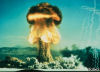
[BBC News] Radioactive particles from nuclear tests that took place decades ago persist in the upper atmosphere, a study suggests. Previously, scientists believed that nuclear debris found high above the Earth would now be negligible. However this research shows that plutonium and caesium isotopes are still present at surprisingly high concentrations. Read more

Publications

Garnet: Common Mineral, Uncommonly Useful

Garnet: Common Mineral, Uncommonly Useful

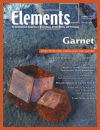
Elements December 2013 issue. Take a small crystal of garnet, a common mineral with built-in chronometers and uncommon properties due to its crystalline structure, study it, and suddenly you have insights on large-scale processes like plate subduction, timing and duration of metamorphism, seismicity, and more. The authors in this issue, assembled by guest editors Ethan Baxter, Mark Caddick, and Jay Ague, take us on a whirlwind tour of the mantle and crust, and inform us on the technological applications and the place in history of this beloved mineral.

This issue and all previous ones are available online at Elements online (user id = email address and password = EAG membership number), and the print copies are in the mail.

Job opportunities

Check the latest job opportunities

Check the latest job opportunities

Receive job ads as they are posted: like us on Facebook or follow us on Twitter (@EAG_). Post a position on the EAG job page (free of charge): send the details to EAG Office.

  • Professor for Geochemistry and Economic Geology
  • Research Fellow Position in Aqueous Geochemistry
  • PhD position on chemical sensor applications for the analysis of algal blooms
  • MSc and PhD opportunities with the Multidisciplinary Applied Geochemistry Network (MAGNET) in analytical, environmental and exploration geochemistry
  • PhD position in Geomicrobiology 'Soil contamination by depleted uranium ammunition’
  • PhD position ‘Reconstructing carbon and nutrient cycling in the Northeast Pacific Ocean over the past 15 million years’
  • PhD Project in Geomicrobiology/Biogeochemistry ‘Interrelation of iron(II)-oxidizing bacteria in sediments – consequences for biomineral formation, fate of trace metals and greenhouse gas emission‘
  • 3 PhD Positions in Geochemistry/Cosmochemistry ‘Isotopic similarities and differences between Earth and Moon', ‘Redox state of the Earth’ and ‘Nuclear anomalies in meteorites’
  • PhD in Hydrogeology German speakers only

More jobs at www.eag.eu.com/jobs.

Thank you for your attention

Subscribe | Unsubscribe | Previous issues
Advertise in the EAG newsletter
Copyright © European Association of Geochemistry | Credit banner image: David Benavente, 2017 Photo Contest Winner