EAG Newsletter
Join / Renew | Membership benefits | Member login
Contact Facebook Twitter YouTube
European Association of Geochemistry EAG Blog EAG Comic

Goldschmidt2018

Perspectives Letters

Perspectives

Partners

December 2013

Society news

The GS and EAG announce the 2014 Geochemical Fellows

The GS and EAG announce the 2014 Geochemical Fellows

The Geochemical Society and European Association of Geochemistry are pleased to announce those receiving the honor of 2014 Geochemical Fellow. Fellows elected this year include:

  • Yuri Amelin (Australian National University)
  • Richard Arculus (Australian National University)
  • Shan Gao (China University of Geosciences)
  • Robert Hazen (Carnegie Institution for Science)
  • Marc Hirschmann (University of Minnesota)
  • Rebecca Lange (University of Michigan)
  • Bernard Marty (Centre de Recherches Petrographiques et Geochimiques)
  • Hiroko Nagahara (The University of Tokyo)
  • Martin Palmer (University of Southampton)
  • Adina Paytan (University of California, Santa Cruz)

The Geochemical Fellows will receive their honor at the 2014 Goldschmidt Conference in Sacramento, CA, USA.

Why join the EAG for 2014 or longer?

Why join the EAG for 2014 or longer?

Our membership is very important; it is the foundation of our society. We strive to serve our members by promoting geochemistry within and beyond our community, by organizing the Goldschmidt conference as key platform for our science, by promoting smaller workshops, by recognizing scientific excellence and through publications outside of the standard formats. In the recent years the EAG has grown significantly. We remain determined to continue to serve our community and raise the profile of geochemistry, especially at a time when important societal challenges need the engagement of our scientists. These are exciting times to be part of the EAG, and as a society we offer a comprehensive set of membership benefits:

  • Reduced registration fees at Goldschmidt conferences
  • Subscription to Elements Magazine (in print and all back issues online)
  • Subscription to Geochemical Perspectives (in print and all back issues online)
  • Reduced subscription rates for Chemical Geology and Geofluids
  • Sponsorship of short courses
  • Network platform for geochemists: the EAG aims to connect members of the geochemical community in particular through the EAG Blog, social media, job postings, news in geochemistry, participation in council elections etc

Our fees for 2014 are unchanged and we provide valuable discount through our multi-year membership option:
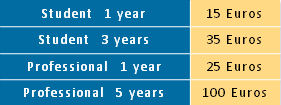

EAG Membership Fees

Membership expiring soon?

Membership expiring soon?

Does your membership expire at the end of 2013? The EAG Office recently emailed renewal notices to those whose membership expires soon. Memberships are calendar year, so to make sure you enjoy uninterrupted membership, think about renewing before 15 January.

Also, should institutions be interested in subscribing several members at once, the EAG has now introduced the Institutional Membership. To proceed, just use the Institutional Membership Form and send it to our treasurer.
Goldschmidt conferences

Goldschmidt2014: abstract submission opens 1 January

Goldschmidt2014: abstract submission opens 1 January

Plans are progressing well for the 2014 California Goldschmidt (8-13 June). The teams responsible for the conference’s 25 themes have suggested over 150 sessions. An exciting program of field trips and workshops is also being prepared, along with a wide range of social events. Abstract submission will be open from 1 January until 1 February.

EAG Blogosphere

The (Geo)chemistry Christmas Chart

The (Geo)chemistry Christmas Chart

[By Chris Pearce] During my childhood a massive part of the pre-Christmas hype was about who would make it to the coveted number 1 spot in the UK charts. I remember waiting in anticipation to see whether Cliff Richard would strike again, or whether the likes of Mr Blobby or East 17 would beat him to it. I have to confess that my interest in the singles chart has waned a bit since then... Read more

Geochemistry making the news

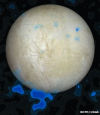
Jupiter's icy moon Europa 'spouts water'

Jupiter's icy moon Europa 'spouts water'

[BBC News] Images by the Hubble Space Telescope show surpluses of hydrogen and oxygen in the moon's southern hemisphere, say astronomers writing in Science journal. If confirmed as water vapour plumes, it raises hopes that Europa's underground ocean can be accessed from its surface. Future missions could probe these seas for signs of life... Read more

Hydrogen squeezed from stone could be new energy source

Hydrogen squeezed from stone could be new energy source

[BBC News] Scientists from the University of Lyon have discovered a new way to split hydrogen gas from water, using rocks. The method promises a new green energy source, providing copious hydrogen from a simple mixture of rock and water. It speeds up a chemical reaction that takes geological timescales in nature... Read more

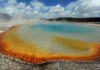
Yellowstone supervolcano 'even more colossal'

Yellowstone supervolcano 'even more colossal'

[BBC News] The supervolcano that lies beneath Yellowstone National Park in the US is far larger than was previously thought, scientists report. A study shows that the magma chamber is about 2.5 times bigger than earlier estimates suggested. A team found the cavern stretches for more than 90km (55 miles) and contains 200-600 cubic km of molten rock... Read more

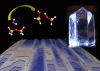
How Water Dissolves Stone, Molecule by Molecule

How Water Dissolves Stone, Molecule by Molecule

[Science Daily] Scientists from Rice University and the University of Bremen's Center for Marine Environmental Sciences (MARUM) in Germany have combined cutting-edge experimental techniques and computer simulations to find a new way of predicting how water dissolves crystalline structures like those found in natural stone and cement... Read more

Rosetta: Anxious wait for comet chaser wake up

Rosetta: Anxious wait for comet chaser wake up

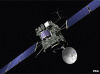
[BBC News] Scientists say they are in for an anxious wait as they prepare to wake a comet-chasing probe from deep-space hibernation. In January, they will attempt to bring the Rosetta spacecraft back online so it can journey towards Comet 67P/Churyumov-Gerasimenko. Once it has reached the huge mass of ice and rock, the team will try to deploy a lander on the comet's surface... Read more

Publications

Elements Thematic Topics for 2014

Elements Thematic Topics for 2014

Elements announces the thematic topics and guest editors for 2014 (more details will be available in the December 2013 issue):

  • February. Asteroids: Linking Meteorites and Planets. Guest Editors: Catherine Corrigan (Smithsonian Institution, Washington) and Guy Libourel (CRPG, Université de Lorraine)
  • April. Ophiolites. Guest Editors: Yildirim Dilek (Miami University of Ohio) and Harald Furnes (University of Bergen, Norway)
  • June. Kaolin: From Ancient Porcelains to Nanocomposites. Guest editors: Paul A. Schroeder (University of Georgia) and David L. Bish (Indiana University)
  • August. Unconventional Hydrocarbons. Guest Editors: David R. Cole (Ohio State University) and Michael Arthur (Pennsylvania State University)
  • October. The Cosmic Conveyor Belt Clock at the Earth's Surface. Guest editors: Friedhelm von Blanckenburg (GFZ Potsdam) and Jane Willenbring (University of Pennsylvania)
  • December. Graphitic Carbons. Guest editors: Olivier Beyssac (CNRS and Université Pierre et Marie Curie, Paris) and Douglas Rumble (Carnegie Institution of Washington)

Job opportunities

Check the latest job opportunities

Check the latest job opportunities

Receive job ads as they are posted: like us on Facebook or follow us on Twitter (@EAG_). Post a position on the EAG job page (free of charge): send the details to EAG Office.

  • Executive Editor for Elements Magazine
  • MSc and PhD opportunities with the Multidisciplinary Applied Geochemistry Network (MAGNET) in analytical, environmental and exploration geochemistry
  • PhD position in Geomicrobiology 'Soil contamination by depleted uranium ammunition’
  • PhD position ‘Reconstructing carbon and nutrient cycling in the Northeast Pacific Ocean over the past 15 million years’
  • PhD Project in Geomicrobiology/Biogeochemistry ‘Interrelation of iron(II)-oxidizing bacteria in sediments – consequences for biomineral formation, fate of trace metals and greenhouse gas emission‘
  • PhD Position in Ecohydrology ‘Transport of bacteria in permeable media under a variety of flow, hydraulic and microbial growth conditions’
  • 3 PhD Positions in Geochemistry/Cosmochemistry ‘Isotopic similarities and differences between Earth and Moon', ‘Redox state of the Earth’ and ‘Nuclear anomalies in meteorites’
  • PhD in Hydrogeology German speakers only
  • Post-doctoral position ‘Inferring the links between water cycle, climate and stratospheric inputs from a data-model approach combining all water isotopes and 10Be in the East Antarctica plateau’
  • Faculty Position in Experimental Earth Science

More jobs at www.eag.eu.com/jobs.

Thank you for your attention and our best wishes for 2014!

Subscribe | Unsubscribe | Previous issues
Advertise in the EAG newsletter
Copyright © European Association of Geochemistry | Credit banner image: David Benavente, 2017 Photo Contest Winner