EAG Newsletter
Join / Renew | Membership benefits | Member login
Contact Facebook Twitter YouTube
European Association of Geochemistry EAG Blog EAG Comic

Goldschmidt2018

Perspectives Letters

Perspectives

Partners

November 2013

Society news

Results of the Council Elections

Results of the Council Elections

The EAG Council Elections ended last week and we are excited to have recorded the highest turnout so far with 1040 votes (38%) cast by EAG members. We wish to thank everyone for their vote and are particularly grateful to the candidates for participating in these elections.

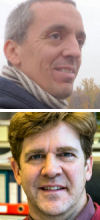
Karim Benzerara and Ruben Kretzschmar have been elected and will join the EAG Council from January 2014.

Karim Benzerara is a CNRS Research Director at the Institut de Minéralogie et de Physique des Milieux Condensés in University Pierre et Marie Curie, France. Ruben Kretzschmar is Professor of Soil Chemistry in the Institute of Biogeochemistry and Pollutant Dynamics at ETH Zurich, Switzerland.

Distinguished Lecture Tour 2013 starting soon

Distinguished Lecture Tour 2013 starting soon

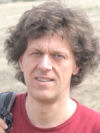
Later this month and in December, Thomas Röckmann, EAG Distinguished Lecturer 2013 and leading specialist in the development and application of isotope techniques to atmospheric research, will be visiting institutions in Budapest, Cluj-Napoca, Krakow and Prague. Several interesting lectures will be given during this tour (view abstracts here).

The EAG would like to thank the host institutions for welcoming Thomas Röckmann and invites all scientists nearby to attend these lectures.

Goldschmidt conferences

Goldschmidt 2014: call for workshops and choose a field trip

Goldschmidt 2014: call for workshops and choose a field trip

Over 400 delegates participated in workshops before the Florence Goldschmidt, and there will be an opportunity to run workshops again immediately before Goldschmidt2014. If you would like run a workshop, please complete the application form available at Workshop Information and return it to the conference helpdesk before 1 December.

The Local Organising Committee proposes a wide range of possible field trips, of scientific or cultural interest and of various length. However, only at most 8 trips will be made available, therefore if you would like to take part in one of the trips, then please select the trip you would like to attend on the Field Trips page, before 1 December.

Goldschmidt2013: final report

Goldschmidt2013: final report

We are now able to report on the final numbers for Goldschmidt2013, which welcomed 4183 registrants including 25% of students. 4132 abstracts (available at goldschmidt.info) were submitted of which 4062 were presented at the conference, with 2095 oral and 1967 poster presentations.

The five most represented delegations came from the USA (743 delegates), Germany (456), UK (402), France (377) and Italy (250). This Goldschmidt edition presented 211 sessions distributed over 25 themes, as well as 14 workshops (attracting 538 delegates) and 7 field trips (attracting 136 delegates). Further details can be found in the conference report.

Goldschmidt2013 has thererefore broken all records and the EAG thanks the members of the organizing committee for their hard work, as well as all delegates who attended, and hopes to welcome you again at future Goldschmidt conferences.
EAG Blogosphere

Expedition to the End of the World – a review

Expedition to the End of the World – a review

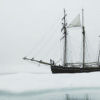
[By Andy Bray] I’ve been to the cinema again and, like last time, I feel compelled to write about it, encouraging you to see the film I just have. Expedition to the End of the World. Just reading the title evokes the vision of a Phileas Fogg-like adventure, and the film doesn’t disappoint. Expedition to the End of the World is a sublime docu-film following a group of scientists and artists as they explore the unchartered fjords of NE Greenland on a three-mast schooner... Read more

 Bonfire Night: When everyone appreciates chemistry

Bonfire Night: When everyone appreciates chemistry

[By Chris Pearce] Remember remember the fifth of November; gunpowder, treason and plot… At this time of year children and adults throughout the UK dress up warm and brave the winds and rain in order to watch a human effigy burn on the bonfire while thousands of pounds of fireworks explode in the sky above. For those who are unfamiliar with this seemingly bizarre tradition, it stems back to 1605 when Guy Fawkes tried to blow up the Houses of Parliament using several barrels of gunpowder... Read more

Geochemistry making the news

Oldest air in the world may be trapped deep in the Antarctic ice

Oldest air in the world may be trapped deep in the Antarctic ice

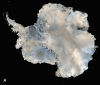
[Los Angeles Times | Science] Tiny bubbles of air buried deep in the ice of Eastern Antarctica may contain bits of the Earth's atmosphere as it was 1.5 million years ago, according to a new report. "Ice is a great medium for trapping air," said Ed Brook of Oregon State University, one of several authors of a paper in the journal Climate of the Past that describes where this ancient ice might be. "It traps it without altering it very much." Read more

We should expect more devastating storms

We should expect more devastating storms

[Mirror News] Typhoon Haiyan: As climate change continues, we should expect more devastating storms. Tropical storm Haiyan built to a crescendo over the Pacific earlier this week before slamming, as a Super Typhoon, into the Philippines south of Manilla yesterday. The island nation was just picking itself up from an earthquake that struck a week or so before, and now is contending with flood, storm and deluge. Read more

Meteorite may explain 'how Mars turned to stone'

Meteorite may explain 'how Mars turned to stone'

[BBC News] A meteorite reveals clues to how Mars lost its thick, carbon dioxide-rich atmosphere and became a cold, rocky desert, researchers say.They say the Lafayette meteorite shows signs of carbonation - where minerals absorb CO2 in a reaction with water. Mars lost its protective blanket about 4 billion years ago, perhaps because of the loss of its magnetic field, space impacts, or chemical processes. Read more

Publications

Nitrogen and Its (Biogeocosmo) Chemical Cycling

Nitrogen and Its (Biogeocosmo) Chemical Cycling

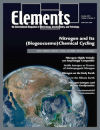
NASA’s incredible Blue Marble 2012 image on the cover of the October issue of Elements was deemed the best to convey the whole-Earth (and beyond) perspective of nitrogen adopted by Guest Editors Gray Bebout (Lehigh University), Marilyn Fogel (University of California, Merced), and Pierre Cartigny (IPGP, Paris). At Earth’s surface, nitrogen largely resides in its very thin atmosphere. Atmospheric nitrogen is fixed into the biosphere, then conveyed into the deeper Earth through subduction, continental collision, and sedimentary burial.

We would like to remind you that EAG members can access all issues of Elements online (user id = email address and password = membership number).

Job opportunities

Check the latest job opportunities

Check the latest job opportunities

Receive job ads as they are posted: like us on Facebook or follow us on Twitter (@EAG_). Post a position on the EAG job page (free of charge): send the details to EAG Office.

  • 2 PhD positions in Isotope Geo- and Cosmochemistry
  • Graduate Research Opportunity focusing on the Interactions between metal-based nanoparticles and aquatic natural organic matter
  • Marie-Curie PhD position as part of ITN “Zooming in-between Plates” React
  • Steve Fossett Postdoctoral Fellowship
  • Director of Technology and Development at Global Earthquake Model Foundation

More jobs at www.eag.eu.com/jobs.

Thank you for your attention

Subscribe | Unsubscribe | Previous issues
Advertise in the EAG newsletter
Copyright © European Association of Geochemistry | Credit banner image: David Benavente, 2017 Photo Contest Winner