EAG Newsletter
Join / Renew | Membership benefits | Member login
Contact Facebook Twitter YouTube
European Association of Geochemistry EAG Blog EAG Comic

Goldschmidt2018

Perspectives Letters

Perspectives

Partners

October 2013

Deadline coming up

Awards 2014: send your nomination before 15 November

Awards 2014: send your nomination before 15 November

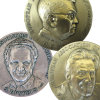
If you know of scientists deserving recognition, please take a few minutes to nominate them for an EAG Award. The process is simple and the awards recognize scientists at various stages of their career:

  • Houtermans Award for scientists under 35 or within 6 years of their PhD
  • Samuel Epstein Science Innovation Award for scientists between 35 and 55 working in the field of isotope geochemistry
  • Urey Award, recognizing scientific excellence over a career.

Publications

Latest issue of Geochemical Perspectives is online

Latest issue of Geochemical Perspectives is online

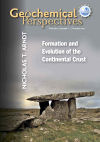
The latest issue of Geochemical Perspectives, Formation and Evolution of the Continental Crust, written by Nicholas T. Arndt, describes how the granitic magmas of the continental crust formed in subduction zones, from the early Archean to the present day, and how this process was accelerated periodically by the rise of mantle plumes.

The printed copies of the issue will be mailed shortly to EAG members and attendees of Goldschmidt2013 who have provided their address.

Society news

EAG Council elections coming up

EAG Council elections coming up

From January 2014, the EAG Council will welcome two new councillors, elected by the EAG members. Councillors serve for three years, participate in council discussions, decisions, initiatives and act as ambassadors of the society. Sitting in a council can seem somewhat obscure, and as you are about to elect councillors, we thought that asking the current members of the council to share their personal views on what it means to be a councillor would be helpful.

This year's slate of candidates includes: Karim Benzerara, Dominik Hezel, Hans Keppler and Ruben Kretzschmar. The EAG sincerely thanks them for agreeing to stand for election.

Online voting will be open from 21 October until 4 November. On 21 October, EAG members will receive an email ballot to cast their vote. We thank you in advance for your participation, which is crucial for the success of these elections.

From students at DINGUE3

From students at DINGUE3

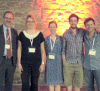
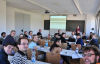
Every year the EAG aims to support student attendance at short courses and small conferences in geochemistry. DINGUE3 – Developments in Noble Gas Understanding and Expertise – is one of the pre-Goldschmidt2013 workshops which received EAG sponsorship. During this two day meeting noble gas geo-and cosmo-chemists discussed aspects of new noble gas applications to terrestrial and extraterrestrial science. Students who received a grant were asked to write about their experience of the event. Read some excerpts.
Short course sponsorship for 2014

Short course sponsorship for 2014

Following the example above (DINGUE3), EAG members can request sponsorship for students attending short courses or small conferences in Europe. So if your institution would like to organize a short course focusing on special topics or techniques from the broad field of geochemistry, EAG could sponsor students attending the course, up to 200 Euros per student. For information, visit www.eag.eu.com/education/shortcourse/ or contact the EAG Office.
Goldschmidt conferences

Abstracts from Goldschmidt2013 and previous conferences

Abstracts from Goldschmidt2013 and previous conferences

Abstracts from Goldschmidt2013 have now been published in MinMag. They are also available and searchable in the Goldschmidt archive, where you can find all abstracts from Goldschmidt conferences since the year 2000 onwards.

EAG Blogosphere

EMI2013 – A ‘non-traditional’ location...

EMI2013 – A ‘non-traditional’ location...

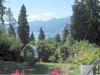
EnvironMetal Isotopes (EMI) 2013 took place on 18-23 August and the EAG sponsored several students to attend this conference. One of them, Sara R. Worsham, shared her experience of this unique event:

EMI 2013 – A ‘non-traditional’ location for a ‘non-CHONS’ conference. The Hill of Utopia, also known as Monte Verità, was a centre of naked healing light therapy in the early parts of the 20th century. In 1989, Monte Verità was turned into a scientific congress center between the Swiss Federal Institute of Technology (ETH) and the Centro Stefano Franscini (CSF). Read more

Highlights from Goldschmidt2013

Highlights from Goldschmidt2013

The Goldschmidt blogging team (Andy Bray, Matt Herod, Simon Redfern, Betsy Swanner and Emma Versteegh) have put together their highlights from Goldschmidt2013, see them in the post Goldschmidt 2013 revisited. Feel free to add your own personal highlights in the comment section.

Geochemistry making the news

Meteorite pulled from Russian lake

Meteorite pulled from Russian lake

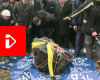
[BBC News] Divers working at a Russian lake have recovered a half-tonne chunk of the space rock that exploded over Chelyabinsk earlier this year. The object plunged into Lake Chebarkul in central Russia on 15 February, leaving a 6m-wide hole in the ice. Scientists say that it is the largest fragment of the meteorite yet found. Read more

Also see the Goldschmidt2013 Press Release 'Chelyabinsk meteorite had previous collision or near miss'.

Ancient soils provide early whiff of oxygen

Ancient soils provide early whiff of oxygen

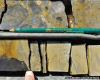
[BBC News] An international team has made the claim in Nature magazine after studying the oldest soils on Earth. The researchers say elements in the three-billion-year-old material show evidence for oxidative weathering. This is some 700 million years before the Great Oxidation Event when other geological data points to a dramatic rise in free O2 in the atmosphere. Read more

Giant channels discovered beneath Antarctic ice shelf

Giant channels discovered beneath Antarctic ice shelf

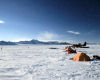
[Phys.org] Scientists have discovered huge ice channels beneath a floating ice shelf in Antarctica. At 250 metres high, the channels are almost as tall as the Eiffel tower and stretch hundreds of kilometres along the ice shelf. The channels are likely to influence the stability of the ice shelf and their discovery will help researchers understand how the ice will respond to changing environmental conditions. Read more

New ideas for how Earth core formed

New ideas for how Earth core formed

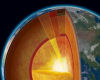
[BBC News] Experiments on samples of iron and rock held at immense pressures have led to new ideas of how Earth's core formed. Scientists from Stanford University have shown that iron metal will flow through rocks 1,000km beneath our feet. Using sophisticated X-ray imaging, they watched molten metal moving through rocks, squeezed to huge pressures between the tips of pairs of diamonds. Read more

Climate Puzzle Over Origins of Life On Earth

Climate Puzzle Over Origins of Life On Earth

[Science Daily] The mystery of why life on Earth evolved when it did has deepened with the publication of a new study in the latest edition of the journal Science. Scientists at the CRPG-CNRS University of Lorraine, The University of Manchester and the Institut de Physique du Globe de Paris have ruled out a theory as to why the planet was warm enough to sustain the planet's earliest life forms when the Sun's energy was roughly three-quarters the strength it is today. Read more

Job opportunities

Check the latest job postings

Check the latest job postings

Receive job ads as they are posted: like us on Facebook or follow us on Twitter (@EAG_). Post a position on the EAG job page (free of charge): send the details to EAG Office.

  • Graduate Research Opportunity focusing on the Interactions between metal-based nanoparticles and aquatic natural organic matter
  • Marie-Curie PhD position as part of ITN “Zooming in-between Plates” React
  • Postdoc in Aqueous Geochemistry and Mineralogy
  • Full Professor in “Organic Geochemistry”, Tenured
  • Director of Technology and Development at Global Earthquake Model Foundation

More jobs at www.eag.eu.com/jobs.

Thank you for your attention

Subscribe | Unsubscribe | Previous issues
Advertise in the EAG newsletter
Copyright © European Association of Geochemistry | Credit banner image: David Benavente, 2017 Photo Contest Winner